
Why Healthcare Isn’t Designed to Make You Healthy
(originally published on LinkedIn on 02/06/2025)I’ve spent years working with high-achievers to optimize their health and performance. Over time, I’ve come to a sobering realization: the healthcare system is not designed to help people thrive. It’s designed to manage disease - and that’s a very different goal.
Here’s why I believe the system is fundamentally misaligned with your best interests and what might need to change.
We’re Getting Better at Treating Illness…
…and Worse at Building Health
Let’s be honest: the healthcare system is broken. Not just in Portugal, the UK, or the US (though that one’s particularly broken). It’s a global issue.
We’ve become incredibly good at keeping people alive and delaying death. Acute care has never been stronger. Disease management is improving. Healthcare teams work miracles daily.
But while we’re getting better at preventing people from dying, we’re not doing much to help them feel truly well.
Chronic disease is rising.
Most adults are on daily medication.
Healthcare costs keep growing—with little improvement in real health outcomes.
So here’s the question:
How can we be so advanced in medical technology, and yet so limited in improving human vitality and well-being?
The Core Problem: Misaligned Incentives
The answer, in my view, is simple but powerful:
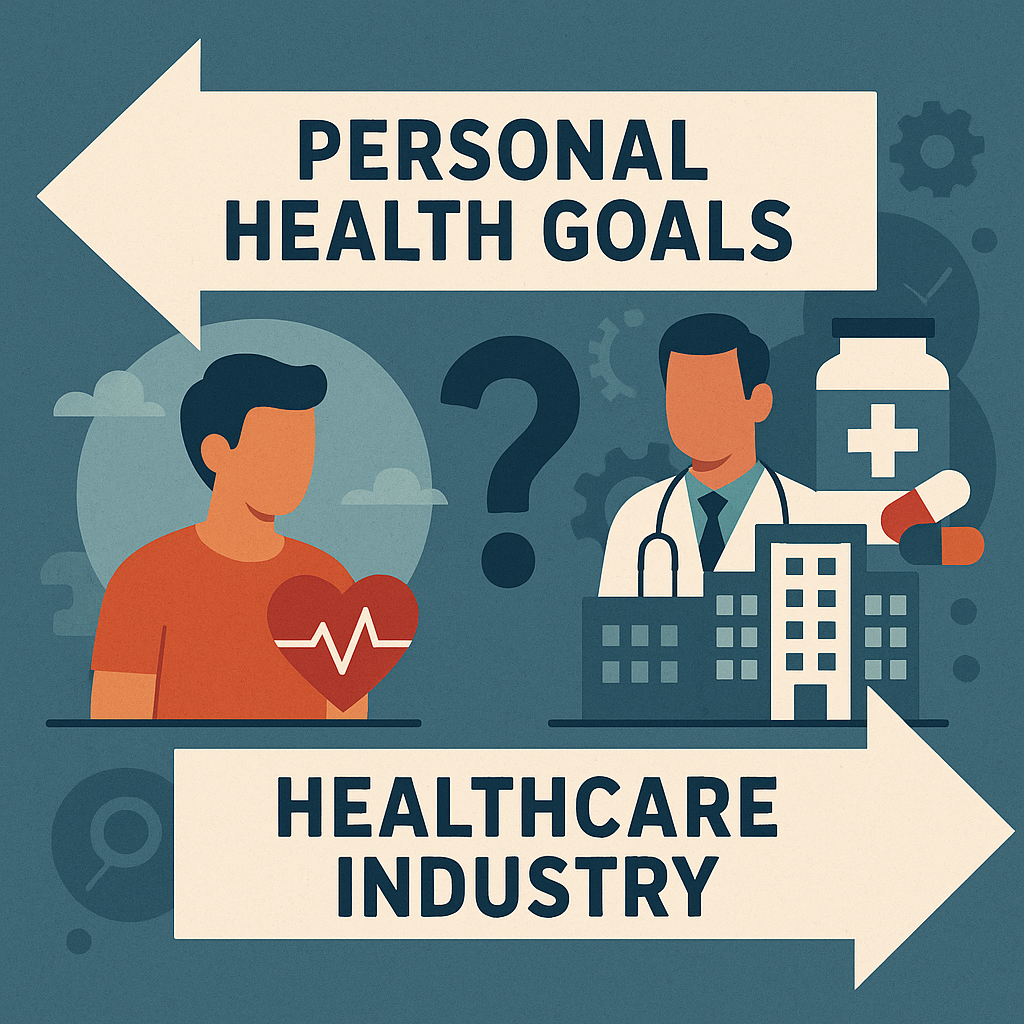
The interests of patients are not aligned with the interests of the healthcare system.
A few years ago, I said this on national TV:
“We’d be better off as a society if we just admitted that healthcare is a business - and decisions are made accordingly.”
I stand by that even more now.
Let me clarify: I believe most doctors, nutritionists, and health professionals truly want the best for their patients. I include myself in that.
But…
Patients want to get healthy as quickly and efficiently as possible, with minimal intervention.
Doctors and practitioners are paid per session. The more sessions, the more revenue.
Hospitals and clinics earn more the longer you remain a client.
Pharma and supplement companies lose money if you no longer need their product.
Research only happens if someone can profit from the result.
So when someone says, “There’s no evidence for that,” maybe it’s just that no one funded the evidence.
What This Means for You (and Me)
As a doctor, I’ve seen that the real breakthroughs with patients don’t usually happen during a 60-minute appointment.
They happen:
in follow-up messages,
during casual check-ins,
while reviewing notes and data in-between sessions,
when I have the time and mental space to go deep.
In other words, true health strategy requires time, not just knowledge.
What most high-performing individuals need isn’t just a doctor.
They need a health strategist, performance coach, and educator - someone with the bandwidth to get to know them deeply, build context, and create solutions that actually work.
But the traditional pay-per-appointment model doesn’t support that.
So… What Can We Do?
I don’t have all the answers. But I’ve been exploring new models that better align everyone’s interests:
1. Fee-for-Result
You pay to solve a problem or reach a goal.
💡 Simple, elegant, and aligned.
⚠️ Challenges: How do we define success? What if results aren’t reached? Who’s accountable?
2. Membership Model
A long-term relationship that gives patients ongoing access, flexibility, and personalized support.
📈 This is how doctors like Peter Attia work and I’ve used it with a few select clients.
⚠️ It’s premium. Limited. And not scalable for everyone.
3. Group Support Hybrid
Combines 1-on-1 care with community, shared learning, and accountability.
🤝 Scalable, supportive, and still personal.
✅ Possibly the best of both worlds.
Let’s Rethink This - Together
I can’t shake the feeling that we’re stuck in a model that doesn’t serve anyone well - not the patient, not the practitioner, and not society.
So I want to ask you:
What do you think? Which model makes sense to you? Have you experienced this misalignment yourself?